Health & Fitness
Early Local Vineyards
A brief account of the early wine industry in the Santa Clara Valley
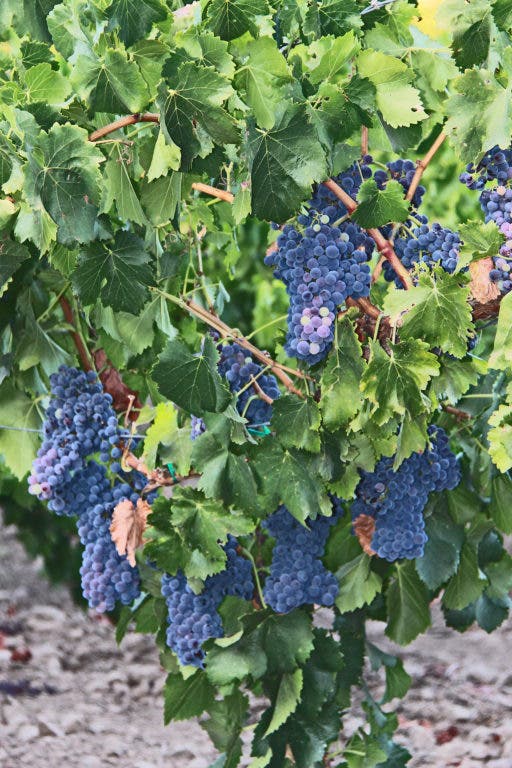
At one time, grapes were nearly as big a crop in the Santa Clara Valley as prunes. This blog is a brief account of the early wine industry in Valley. It is condensed from my new local history book, The Last of the Prune Pickers: A Pre-Silicon Valley Story.
The grapes grown at Mission Santa Clara were not of a quality to produce commercial wine, but many settlers who came later brought their choice vines with them. As with fruit trees, nearly countless varieties of grapes were tried.
Elisha Stevens (of Steven’s Creek fame), who in 1844 led one of the first wagon trains into California, planted a vineyard in the foothills of what is now Cupertino. Stevens had come to California seeking for gold—before it was discovered. He was apparently trained in prospecting, and after leaving off his party, went into the Sierras looking for gold. He did not find what he was looking for, so he came back to the Santa Clara Valley and planted his vineyard near today's Blackberry Farms Golf Course.
Find out what's happening in Campbellwith free, real-time updates from Patch.
An interesting note: Stevens had been in many of the right places in the Sierras to find gold—even up the Feather River Canyon where some of the richest surface deposits were later found just lying in the river.
Stevens may have missed the gold, but he got the location right for his vineyard. The hill country of the Santa Clara Valley, especially on the west and south sides, was ideal for growing grapes. Many other settlers followed Stevens and planted vineyards in the area. Almost all of them were Europeans who had brought their own stock from their mother countries and were well-versed in wine-making.
Find out what's happening in Campbellwith free, real-time updates from Patch.
One of the earliest was Pierre Mirassou, who established the Mirassou Winery in what is today’s Evergreen District of San Jose. Charles Lefranc, another experienced wine maker from France, established Almaden Vineyards in 1852 along the southern hills. After Lefranc’s death, his partner and son-in-law, Paul Masson, went out on his own and started his winery in Saratoga. Masson’s specialty was champagne, which his winery produced in Saratoga until the early 1970s. One of his original buildings still stands today. It is located off of Pierce Road and is now used for social gatherings.
Virtually all the grapes produced in the Santa Clara Valley were for wine making, and many varieties proved successful. Grapes for raisins were (and still are) grown in the Central Valley where it is hotter and more conducive to growing raisin grapes.
It is not so easy to just pick up a vine or a fruit tree, take it outside of its natural habitat, and plant it. Many things can, and do, go wrong. Just as many of the native peoples in the Americas died from European diseases because they lacked immunity to them, so it can be with plants. A case where something did go horribly wrong was when someone took cuttings from wild grapes in California and carried them off to Europe to experiment with them. A tiny insect called Phylloxera came along for the ride, to which the European vineyards had no resistance. So the European wine industry took a big hit.
And the California wine industry got off the ground.
The California wine industry became huge, but the boom in the Santa Clara Valley was over by 1890. As more and more vineyards were planted and started bearing, the necessary infrastructure—cellars, presses, cooperage, bottle works, etc.—did not keep pace. The grape growers in the Valley were stuck with a lot of grapes that they could not process. Vintners in other areas did put in the needed infrastructure, and because wine grapes cannot be transported very far, the San Joaquin Valley and the Napa/Sonoma area became California’s wine country.
In the western and southern foothills of the Santa Clara Valley, many farmers tore out their vineyards and planted prunes and apricots.
The Villa Montalvo property in Saratoga (now a cultural center) was purchased by Senator James Phelan in 1912 and had been almost entirely vineyards. Phelan tore out the vineyards and built his estate and gardens.
But the vineyards made a comeback beginning in the 1980s, and today there are many small vineyards in the western and southern hills of the Valley. Although most of the newer vineyards are not self-sustaining commercial enterprises, who is not glad to see them there? How pleasant is a vineyard!
Other than these reminders of the past, all that remains of the early grape growing era in the Valley are a few street names.
The Last of the Prune Pickers is available at www.2timothypublishing.com